FinMentor: Translating behavioral economics into International Financial Wellness
![[background image] image of contact office (for a general contractor)](https://cdn.prod.website-files.com/689687db816830fc9288fc79/6954817ac409787946e7763e_Screenshot%202025-12-30%20at%205.50.18%E2%80%AFPM.png)
The Analysis Breakdown
The Problem
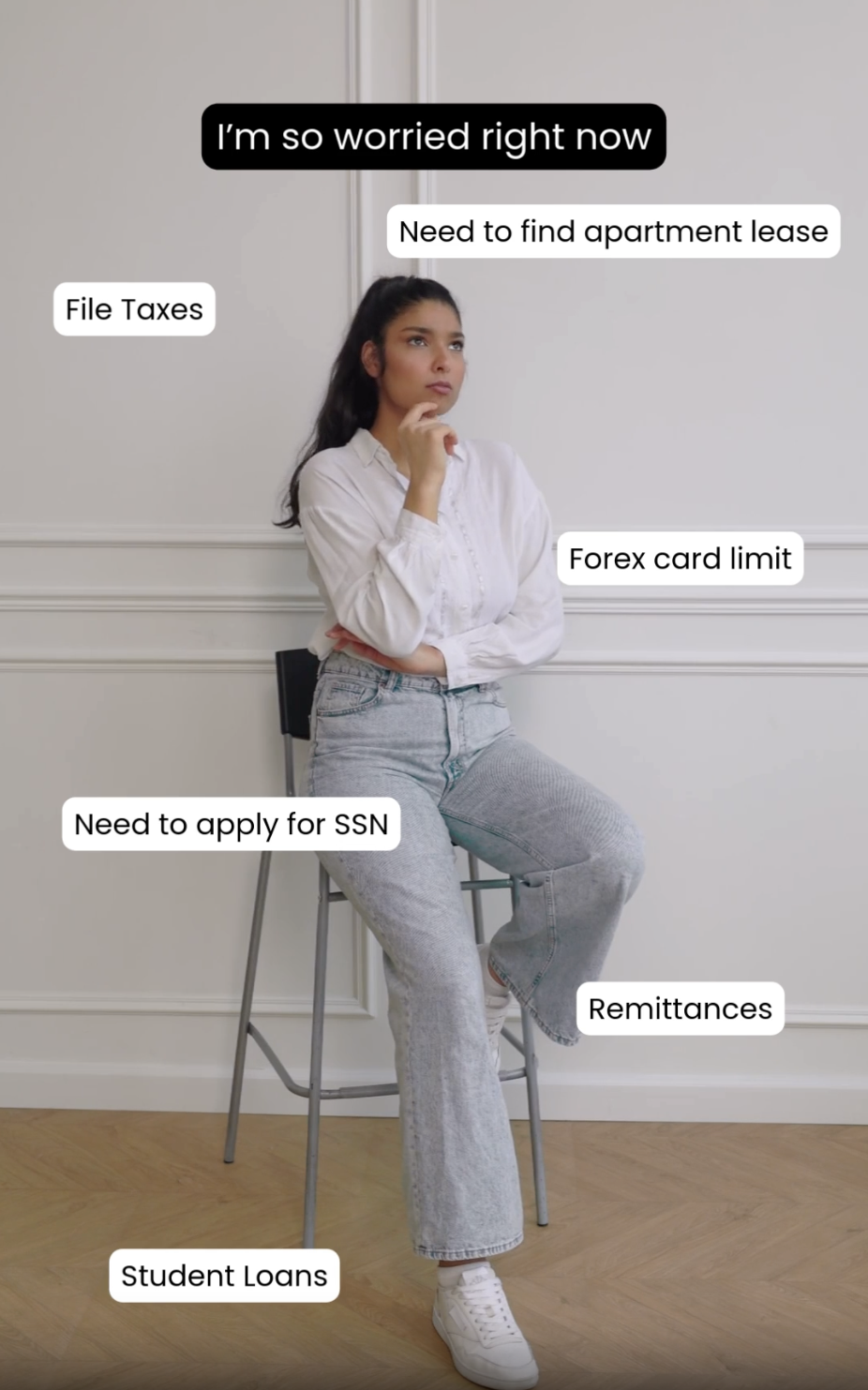
International students are dropped into a "financial black hole." While 66% of Americans fail basic financial literacy tests, the barrier is even higher for international students who have no U.S. credit history, face visa-related work restrictions, and are culturally accustomed to different banking norms.
The Pain Point: Existing resources are siloed. University offices handle visas, and banks handle transactions, but no one handles the cultural translation of financial identity.
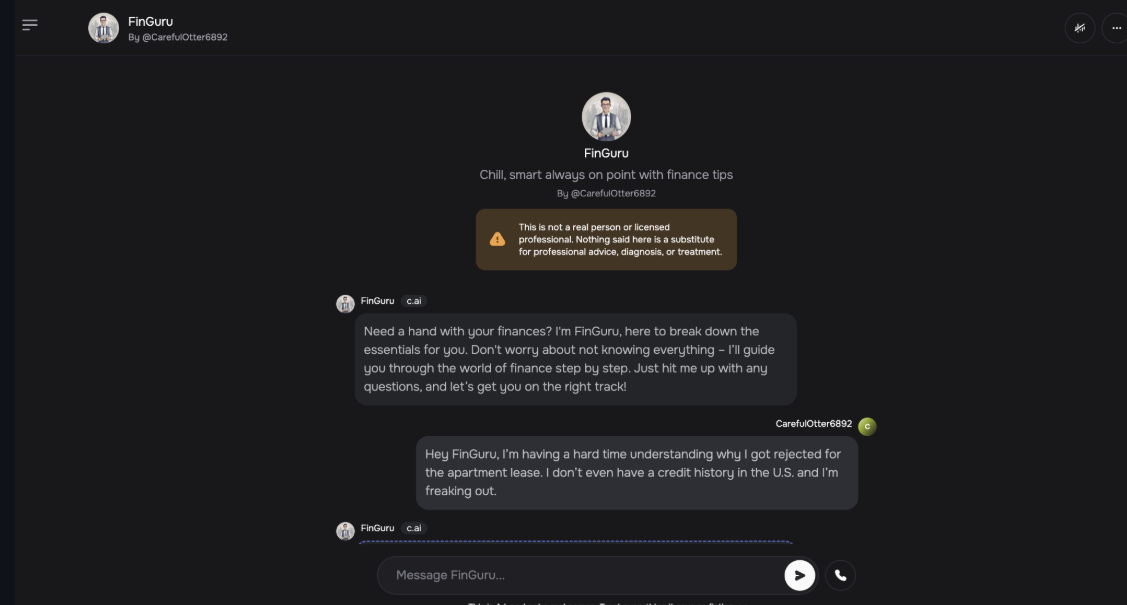
The Apartment Lease Crisis: Many students face immediate "systemic rejection"—such as being denied an apartment lease because their years of perfect financial behavior in their home country don't translate into a U.S. Credit Score.

The Solution
FinMentor acts as a "chill, nonchalant guru" to lower the high anxiety associated with financial jargon.
I integrated Loss Aversion and Commitment Devices into the chat logic. Instead of just defining a credit score, FinMentor explains why the concept exists in the U.S. compared to the user's home country, nudging them toward credit-building actions that feel culturally safe.
Technical Deep Dive: Prototyped using Character.ai to test conversational "vibe." I designed the interaction to be "Identity-Based"—the bot remembers the user's visa status and cultural background, ensuring advice on "starting a side hustle" is always filtered through legal compliance.
The Approach
I utilized a Behavioral Economics framework to move beyond a transactional chatbot to an identity-based mentor.
Research: I conducted deep-dive interviews with international students and identified five Systemic Gaps: Visa-specific financial constraints, currency exchange anxiety, the U.S. credit puzzle, tax filing (W2/1099), and the shift from family interdependence to U.S. independence.
Information Architecture: I organized the chatbot’s logic into a Cultural Financial Identity Framework. This maps a user’s home-country norms (e.g., "debt is shameful") against U.S. requirements (e.g., "credit is trust") to create a personalized roadmap.